- 2026 Majengo
- All rights Reserved

Conventional NDT
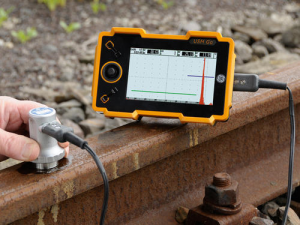
Ultrasonic Flaw detection
Ultrasonic testing is the NDT method that uses beams of mechanical waves (vibration) of short wavelength and high frequency transmitted from a small probe in contact with the specimen surface and detected by the same or other probe . Such mechanical vibrations have different forms depending on the detection of particle movement in the wave motion, so there are several ultrasonic forms of ultrasonic waves. The most common and widely used in NDT are compressional and transverse (shear) waves. They can travel large distances in fine-grained metal and an oscilloscope display (A-scan) shows the time that it takes for an ultrasonic for an ultrasonic pulse to travel to a reflector (flaw or back-surface). Applications include location of manufacturing defects in welds and casting through corrosion / erosion monitoring and large scale corrosion mapping.